
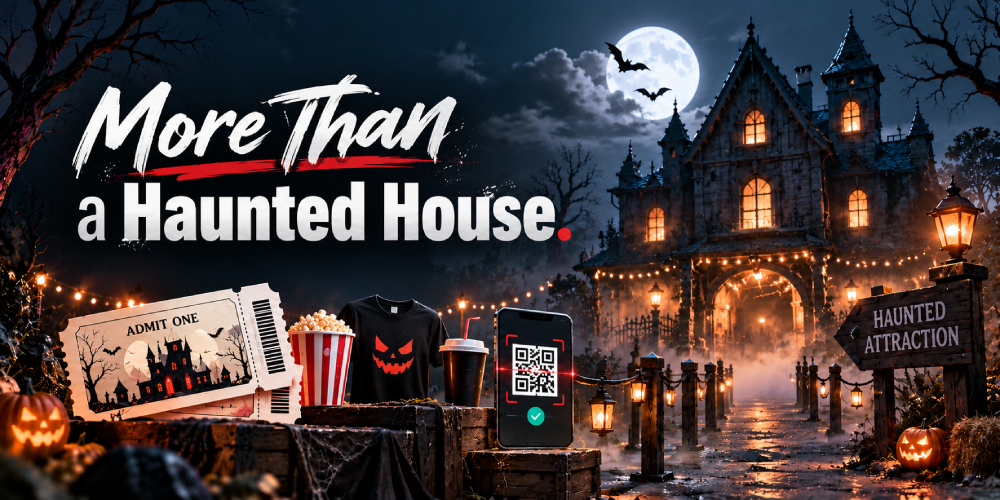
For years, the idea of a haunted house attractions was simple. Guests bought a ticket, arrived at the attraction, walked through the haunted house, got scared, and went home.
But the haunted attraction industry has changed.
Today, a haunted house attractions management can be a much bigger experience. There may be multiple attractions, VIP options, timed entry, escape rooms, add-ons, merchandise, food, photo opportunities, and other activities around the main attraction.
And behind all of that is an increasingly complex operation. The scare is still the reason people come. But everything around the scare is becoming just as important to running a successful haunted attraction.
The Guest Experience Starts Before the Haunted House
The experience does not begin when a guest walks through the entrance. It can begin weeks before their visit.
A guest may discover a haunted attraction through social media, search engines, online reviews, or AI-powered recommendations. From there, they may visit the website, explore haunted house tickets, compare dates and experiences, and decide where to book.
That makes the online booking experience part of the attraction. If guests cannot quickly understand what they are buying, which date to choose, or how the different ticket options work, the excitement can quickly turn into frustration.
For haunted attraction guest experience, owners consider haunted house ticketing more than simply putting tickets up for sale. It is one of the first interactions a guest has with the business.
A Ticket Sale Is Only the Beginning
Getting a ticket sale is important, but it is not the end of the process. Once guests arrive, there are many more questions for an attraction owner to think about:
- How quickly can guests check in and get started?
- How can the box office team make relevant upgrades or add-ons easy to purchase?
- Can guests discover VIP experience, or activity while they are there?
- How can you encourage guests to explore merchandise, food, or other offerings?
- What can you do to keep guests entertained while they wait?
- How can you make the experience memorable enough that they want to come back?
- What will make them recommend your attraction to their friends?
- How can staff handle different ticket types, orders, and guest requests without slowing everything down?
These questions become even more important as an attraction grows and starts handling hundreds or thousands of guests.
This is where haunted attraction management becomes much more than ticket sales. It is about managing the entire guest journey, while creating more opportunities to increase revenue, improve the experience, and turn first-time visitors into repeat guests and advocates.
The Bigger the Attraction, the More Moving Parts
A small haunted house may have a relatively straightforward operation.
But as attractions grow, they often add more experiences and more ways for guests to spend their time and money.
A venue might offer multiple haunted houses, timed entry, VIP or fast-pass options, escape rooms, special events, add-ons, merchandise, food and drinks, and group experiences.
Each additional offering creates more revenue opportunities, but also more to manage.
The challenge is making all these experiences work together without making things complicated for guests or staff. This is where choosing the right haunted house ticketing and event management software becomes important.
A platform like FEARTICKET can help bring ticket sales, bookings, payments, box office, check-in, capacity, and other parts of the operation together. It can take some of the pressure off the team before, during, and after the event, so they can focus more on the guests and the experience.
As attractions grow, the right system behind them becomes as important as the attraction itself.
The Box Office Is Still an Important Part of the Experience
Online ticket sales have changed how people buy tickets, but the box office still plays an important role for many haunted attractions.
Some guests decide to visit at the last minute. Some arrive with additional friends. Others may need to make a purchase or upgrade an order at the venue.
A good haunted house ticketing system needs to support these situations without creating additional work for staff.
The goal is simple: make transactions quick, keep information clear, and get guests where they need to go.
Check-In Has Gone Digital Too
The guest has booked their ticket. Now they have arrived. This is where the online booking experience turns into a real-world experience, and the entrance is often the first real interaction they have with your team.
Fast, simple ticket scanning can help keep guests moving through the gate without unnecessary delays. Staff can scan tickets from an organizer app, validate entry, and keep the line moving while focusing on the people in front of them.
The process can go beyond basic ticket scanning too. For attractions that require age or adult verification, digital photo ID verification can help make the process more organized. For groups, staff can check in multiple guests together instead of handling every ticket individually.
These changes may seem small, but when hundreds of guests are arriving around the same time, they can make a noticeable difference.
With the FEARTICKET Organizer App, the team can handle guest check-in directly from a device at the gate, helping make one of the busiest parts of the night faster and easier.
The less time guests spend figuring out how to get in, the more time they have to enjoy what they came for.
One Guest Can Be Worth More Than One Ticket
A haunted house ticket gets the guest through the gate. But once they are there, the night can become much more than the attraction they originally came to see.
They might decide to upgrade their experience, grab food between attractions, buy a souvenir, or stay longer for another activity. The important part is when and how these options are presented.
A guest standing in a long queue might not want another sales message. But a guest who has just finished an attraction, is enjoying the atmosphere, or is looking for something to do next may be much more open to another experience.
This is where the right promotion at the right time can make a difference. A timely text message about a VIP upgrade, a reminder about another attraction, or a special offer on merchandise can turn interest into another purchase without making the experience feel like a sales pitch.
The goal is not to keep selling to guests. It is to keep the experience going. Make the next experience easy to discover. Make upgrades simple to understand. Give guests something worth taking home. Keep the atmosphere going while they wait.
The result is not just a bigger order. It can be a guest who stays longer, spends more, enjoys more, and leaves with more reasons to talk about your attraction.
For a seasonal business, that is a much bigger opportunity than simply selling another ticket.
What Happens After the Scare Matters Too
The guest experience does not necessarily end when someone walks out of the attraction.
What happens next can be just as valuable.
A guest might leave a review, share a video on social media, recommend the attraction to friends, or decide to come back with a different group.
For seasonal attractions, creating a memorable experience can also help build demand for the next season. The attraction creates the memory. The business needs to create the journey around it.
The Haunted House Has Become an Experience Business
A haunted house may have started with one attraction and one ticket. Today, many operators are building complete experiences around their core attraction.
That means the opportunity is no longer just about selling more tickets. It is about creating a smoother journey from discovery to booking, booking to arrival, arrival to experience, and experience to return visit.
The haunted house is still the heart of the business. But the experience around it is what can turn a one-time visitor into a returning guest.
The haunted attraction business is changing.
The attraction no longer starts at the entrance and ends at the exit. It starts when a guest discovers the attraction, continues through booking and arrival, and carries on through everything they see, buy, experience, and remember during their visit.
For operators, that creates a bigger opportunity than simply selling more haunted house tickets.
A well-managed guest journey can help an attraction increase revenue per guest, reduce operational friction, create better experiences, encourage repeat visits, and turn guests into advocates.
And that is where technology becomes more than a ticket-selling tool. The right system can connect ticketing, bookings, capacity, box office, check-in, add-ons, promotions, and guest management so the team can focus on running the attraction rather than managing disconnected pieces of it.
At FEARTICKET, we believe the best technology should work quietly in the background while the attraction takes center stage.
Because guests may forget the details of how they bought their ticket. They will not forget how the night made them feel.
The future of the haunted attraction business is not just about creating bigger scares. It is about creating a better experience around them.
Ready to bring ticketing, check-in, box office, and guest management into one platform? See how FEARTICKET can help run your haunted attraction.